
Financing of renewable energy sectors investment of Germany
- June 27, 2026
- Posted by: Gatelink Capital
- Categories: Energy infrastructure in Germany, Investment in Germany, Renewable energy industry, Renewable energy investment in Germany, Renewable energy sector in Germany, Renewable energy sectors in Germany, Solar and wind power sectors, Wind energy generation, Wind energy sector development in Germany
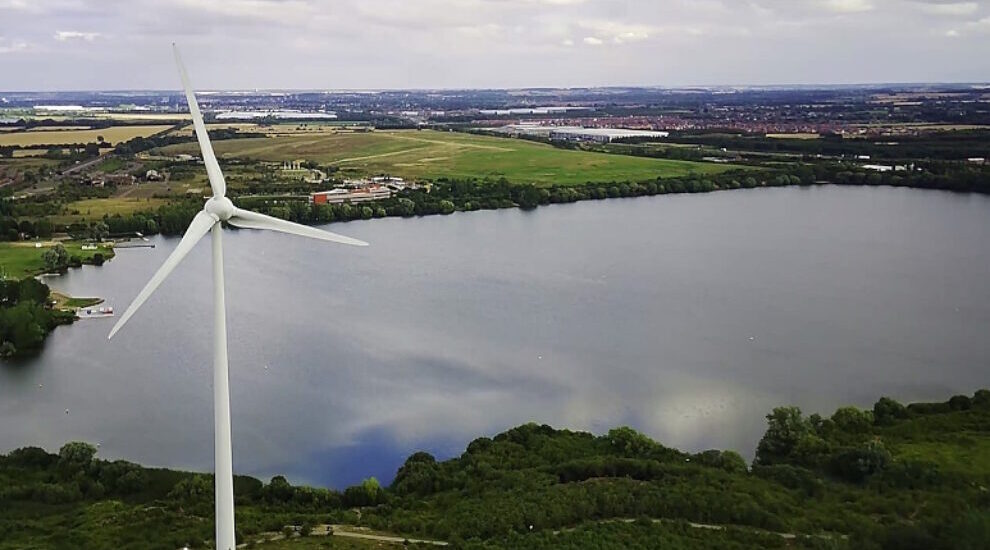
Renewable energy sectors of Germany is growing mainly in solar and wind power sectors, which form the backbone of the energy security and sustainability of Europe’s largest economy.
Germany has been a global leader in renewable energy adoption and investment for a long time.
Country’s total renewable energy production has increased from less than 100 TWh in 2009 to 256 TWh in 2022, and this figure continues to grow. Recent geopolitical changes have given a powerful impetus to the RES development, requiring to reduce dependence on imported hydrocarbons.
GATE LINK CAPITAL LP supports the development of modern energy projects throughout Europe, including Germany. Our team offers financing for the construction and modernization of solar power plants, wind farms, hydroelectric power plants and geothermal projects.
We are ready to facilitate obtaining long-term bank financing and attract a large investment loan from private investors for your ambitious plans.
Contact us to find out more.
Renewable energy sectors of Germany: lending and loans
The renewable energy sectors of Germany has been a key focus area for the country’s transition to a low-carbon economy.
With vast and diverse natural resources, this country prefers to develop solar power plants and large wind farms as the most technologically advanced and affordable sources of green energy. New geothermal technologies are also actively developed and researched here.
According to recent global reports, Germany is not among the world leaders in the development of renewable energy, behind countries such as the United States, China, Brazil and India in terms of absolute installed capacity added. However, Germany has been considered a leader in specific renewable energy sectors. For example, it has been at the forefront of wind energy installations, both onshore and offshore, and has made significant investments in solar photovoltaics.
Germany has a strong agricultural sector that plays a crucial role in the country’s economy.
No wonder that Germany has also a large bioenergy sector, including biomass, biogas, and biofuel production.
This sector has created investment opportunities in areas such as biomass sourcing, biogas plant operations, and biofuel manufacturing.
Germany has implemented various incentives to support the growth of renewables. The Renewable Energy Sources Act (Erneuerbare-Energien-Gesetz, EEG) guarantees feed-in tariffs for renewable energy producers, providing long-term investment security. The government has also set targets for the share of renewable energy in the total energy mix, aiming for 65% by 2030 and 80% by 2050.
The growth of the renewable energy investments in Germany has led to the creation of thousands jobs. According to the Federal Ministry for Economic Affairs and Energy, the renewable energy industry employed around 290,000 people in 2020. These jobs span across various segments of the sector, including manufacturing of electrical equipment and components, engineering, installation, operation and maintenance services.
Germany’s commitment to renewable energy has not only reduced its reliance on fossil fuels but has also positioned the country as one of European leaders in clean energy and sustainable technologies.
The ongoing transition to renewable energy sectors of Germany has attracted large investments, driven capital-intensive innovation, and contributed to the country’s efforts to combat climate change.
Wind energy sector development in Germany
With around 30,000 wind turbines across the country, both offshore and onshore, Germany is one of the European leaders in wind power investment.
It is a significant contributor to country’s RES mix.
Germany has historically utilized a very effective and flexible feed-in tariff system to incentivize investment in RES sector, including wind power. Under the EEG, wind energy producers receive guaranteed payments for the electricity they generate. The feed-in tariffs are set based on various factors such as project size, location, and technology.
The country has invested heavily in the construction of offshore wind farms in the North and Baltic Seas. At the end of 2022, Germany’s offshore wind park had over 1,500 turbines with a total installed capacity of over 8 GW. Previously, German government has set a target of installing 20 GW of offshore wind capacity by 2030 as part of its efforts to achieve an energy transition.
Germany has a substantial onshore wind capacity as well.
The Federal Network Agency (Bundesnetzagentur, BNetzA) reported that by the end of 2020, the onshore wind capacity in Germany was approximately 54 GW.
There are tens of thousands of wind turbines all over the country, especially in the flat regions with rich wind resources in northern Germany.
For example, Lower Saxony (Niedersachsen) is considered the largest onshore wind power region in Germany. It has a diverse landscape that includes flat areas, hills, and coastal regions, making it favorable for wind energy production. The region has a very high concentration of onshore wind turbines, particularly in areas such as Aurich, Emden, and Wilhelmshaven.
Here are some of the largest wind farms in Germany with their installed capacities:
• EnBW Hohe See and Albatros wind farms. These offshore facilities consist of 87 wind turbines, which are located in the North Sea close to each other and about 100 kilometers from the coast. With a total installed capacity of 640 MW, both power plants generate 2.5 billion kWh of energy annually, enough to power more than 700,000 German households.
• Amrumbank West Offshore Wind Farm. Situated in the North Sea, Amrumbank West Offshore Wind Farm has an installed capacity of 302 MW. It consists of 80 wind turbines and is operated by E.ON. The wind farm began operations in 2015.
• Gode Wind 1 & 2 Offshore Wind Farms. Located in the North Sea, Gode Wind 1 and Gode Wind 2 are adjacent offshore wind farms. Gode Wind 1 has an installed capacity of 330 MW, while Gode Wind 2 has a capacity of 252 MW.
• Riffgat Offshore Wind Farm. Located in the North Sea, the Riffgat Offshore Wind Farm has an installed capacity of 108 MW. It consists of 30 large wind turbines and is operated by EWE AG. The wind farm began operations in 2014.
• BARD Offshore 1 Wind Farm. BARD Offshore 1, situated in the North Sea, was one of the first commercial-scale offshore wind farms in Germany. It has an installed capacity of 400 MW, consisting of 80 wind turbines. The wind farm began operations in 2013.
• Alpha Ventus Offshore Wind Farm. Alpha Ventus in the North Sea was Germany’s first offshore wind farm. It has an installed capacity of 60 MW, generated by 12 wind turbines. The wind farm was commissioned in 2009 and serves as a test field for new technologies.
Germany has transitioned to an auction-based system for allocating wind energy projects.
Since 2017, offshore and onshore wind projects are awarded through competitive auctions. This shift has led to cost reductions in the sector and increased efficiency in project development.
Germany has also been focusing on repowering, which involves replacing old wind turbines with newer and more efficient ones. Repowering investment projects contribute to increasing the overall capacity and optimizing the energy output of wind farms. By repowering existing sites, country aims to maximize the potential of wind energy resources in several years.
As the wind energy sector expands, Germany faces challenges in integrating renewable energy into the grid effectively.
The country is investing in grid infrastructure upgrades, energy storage solutions, and demand-response mechanisms to manage the variability of wind energy generation.
Thanks to huge private investments and government support, Germany has become a global leader in wind energy technology and has successfully exported its expertise and technology to other countries. Local companies are involved in manufacturing wind turbines, components, and providing consulting services for wind energy projects worldwide.
Germany is home to prominent companies that manufacture turbines and wind power equipment. Below we have listed several major wind energy equipment manufacturers based in Germany.
• Siemens Gamesa Renewable Energy. Siemens Gamesa is a leading global provider of wind turbines and related services. The company manufactures onshore and offshore wind turbines ranging from 2 to 15 MW. Siemens Gamesa has a significant presence in the wind energy market and is involved in projects around the world.
• Enercon GmbH. Enercon is a company specializing in the production of onshore wind turbines. It offers a range of turbine models, including direct-drive and gearless turbines. Enercon is known for its innovative technology and has a substantial market share in Germany and internationally.
• Nordex Group. Nordex is a global wind turbine manufacturer headquartered in Germany. The company produces onshore wind turbines with capacities ranging from 2.4 to 6.0 MW. Nordex has a strong presence in Europe and other international markets and offers a comprehensive range of wind energy solutions.
• Senvion SE. Senvion is a large wind turbine manufacturer that provides onshore and offshore wind turbines. The company offers a wide range of turbine models suitable for various wind conditions and project sizes. Senvion focuses on technological advancements and has a strong presence in the global wind energy market.
Germany continues to invest in research and development to enhance wind energy technologies.
Advancements in turbine design, improved efficiency, and grid integration solutions are among the most important ongoing research areas. Innovations such as floating offshore wind turbines and hybrid renewable energy systems are being explored to expand the potential of wind energy.
For example, Leibniz University Hannover hosts the Institute of Turbomachinery and Fluid Dynamics, which conducts research on wind turbine aerodynamics, rotor blade design, and wind energy system optimization. The TUM Department of Mechanical Engineering has a dedicated Wind Energy Research Group that conducts research in turbine aerodynamics, control systems, and wind farm optimization.
RWTH Aachen University, University of Stuttgart, and University of Oldenburg are also actively engaged in research and development in the field of wind energy.
Germany has a powerful waste-to-energy sector (WtE), which involves the conversion of municipal solid waste and industrial waste into electricity and heat. Waste incineration plants equipped with energy recovery systems play a crucial role in country’s renewable energy production.
Germany has limited geothermal resources compared to other countries, but it has been steadily investing its geothermal sector. Geothermal energy utilizes heat from beneath the Earth’s surface for electricity generation and heating. The focus in Germany is on the so-called deep geothermal energy, which involves drilling deep wells to access hot water or steam. Several geothermal power plants and district heating systems are currently in operation.
If you are interested in the development of a new renewable energy investment in Germany, our company is ready to assist your business at all stages.
We offer long-term financing for the construction of power plants and energy infrastructure in Germany, as well as provide a full range of professional management, engineering and financial consulting services.
Contact the GATE LINK CAPITAL LP for more information.
GATE LINK CAPITAL LP
E-MAIL: Credit@gatelinkcapitallp.com
Website: https://gatelinkcapital.com/