
Choosing a financial model for a wind farm projects
- March 6, 2026
- Posted by: Gatelink Capital
- Categories: Construction under an EPC contract, financial models for wind power projects, Financing large energy projects, International financial and engineering company, Model for financing a wind farm project, Renewable energy sources, Wind power project finance
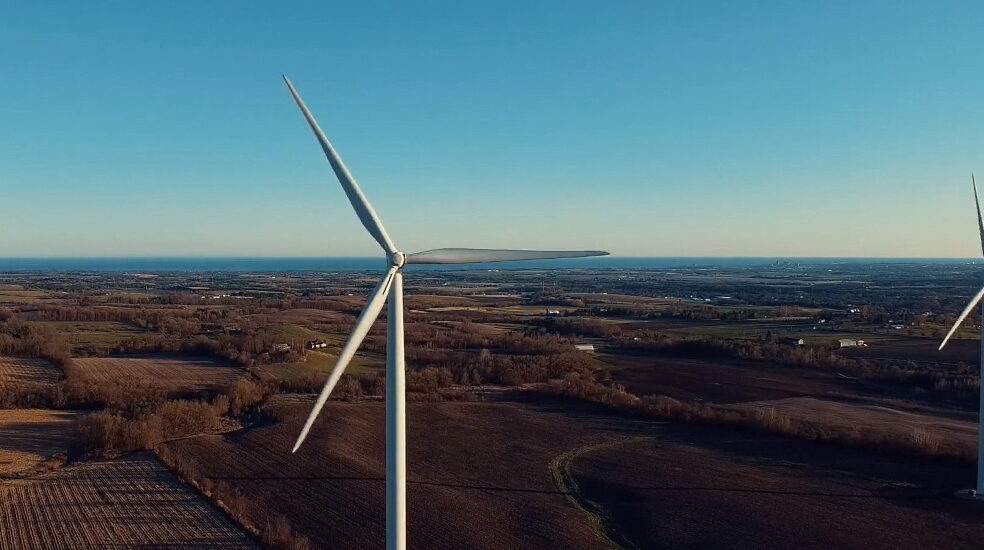
Implementing cutting-edge financial models for windfarm projects play an important role in the contemporary global transformation.
The oil crises of the 1970s, rising energy demand due to rapid economic growth, limited reserves of fossil fuels, and environmental considerations sparked interest in renewable energy sources.
After the first oil crisis, the energy policy of many countries became focused on the use of renewable energy sources.
Today, the liberalized electricity market in Europe and other regions of the world opens up new prospects for investors and offers more efficient market instruments for the implementation of projects in this area.
GATE LINK CAPITAL LP is an innovative international financial and engineering company with a broad presence in Europe, USA, Latin America, North Africa, East Asia and the Middle East. We offer our partners the best renewable energy solutions, including flexible financial models for windfarm projects anywhere in the world.
If you are interested in financing large energy projects, consulting services, technical and legal support, as well as professional project management, contact us at any time and provide details.
Financial model a windfarm projects
Given the high cost of wind power projects, banks, financial institutions, private investors and non-financial companies offer the widest range of financial models for a wind farm project.
Financial models for a windfarm projects can be divided into debt financing, equity financing and mixed instruments.
Bank financing: Bank financing or fundraising through financial intermediaries is one of the most well-known forms for all types of projects.
Typically, financial institutions require a company or individual to have a certain credit history and minimum solvency.
Many banks offer large investment loans, financial models for windfarm projects alongside the construction of other energy efficiency projects.
The interest on these loans can be lower than on conventional loans, and, as a rule, the loan maturity is approximately equal to the payback period of the park.
Such loans can be obtained from most of the largest commercial banks in the European Union, the United States and other regions of the world. The specific terms of these financial instruments can vary widely. Since the development of renewable energy sources is now one of the energy priorities for developed countries, these loans are often granted on concessional terms.
Renting and leasing:
Tools such as renting and leasing are widely used today to implement capital-intensive projects with a long payback period. They are quite similar, but they have a number of fundamental differences.
The conditions offered by financial institutions are extremely varied and can be tailored to the needs of a particular wind power project.
Equity financing:
Equity participation represents an important alternative through which long-term financing from the investor can be obtained through capital increases, that is, the issue of new shares or an increase in the par value of existing ones.
The types of investors can be as follows:
Business angels
Business angels are, as a rule, large private investors offering funds for the implementation of an investment project, as well as technical knowledge and experience.
Such participants provide valuable assistance to the project, providing business contacts for the launch of a little-known young project.
Typically, business angels invest early in a project and help develop initiatives that involve some type of innovation. There are wide networks of business angels who are responsible for collecting, analyzing project information and presenting it to potential investors.
Specialized venture funds:
Specialized venture funds have emerged in the global energy sector today.
Unlike individual investors, venture capital funds are organizations that invest their resources in financing other companies.
This type of investor usually only connects to a wind project for a short time, meaning that in order to invest in a company, venture capital funds must trust the business plan and managers, and also have clarity about their exit strategy.
In general, venture capital funds tend to contribute larger amounts than angel investors, but they also tend to enter more advanced and consolidated phases of a project that has demonstrated market viability.
Equity loans
This is an intermediate formula between equity participation and a long-term loan.
The creditor company charges a fixed interest and a variable interest depending on the development of the investment project, using criteria such as net profit, operating indicators of the business, or any other agreed upon by the parties when evaluating it.
Bank equity loans for the construction of wind farms generally offer longer maturities and grace periods than conventional loans.
Financial models for a windfarm projects strengthens company’s financial position, since the commercial legislation of many countries considers the funds raised as equity.
This is considered subordinated debt, that is, upon closure of the project, they are inferior to “ordinary” loans, but are of higher priority compared to payments to shareholders. Equity loans allow the initiating companies to maintain their creditworthiness.
Participants in the construction of a windfarm projects
To better understand the financing structure of a wind farm project, it is important to identify the parties involved and their role in project implementation.
Thus, it will be possible to find out what the added value of each project participant is.
For the successful construction and launch of a wind farm, it is vital that the proponent has a clear understanding of the rights and responsibilities of the parties involved. By developing a rational contractual structure between SPVs, contractors and lenders, it is possible to attract project financing against the future cash flow of the power plant with the transfer of risks to each of the participants.
SPV: Special Purpose Vehicle:
SPV or SPE is the legal entity responsible for the financial and legal aspects of the project.
Usually it is created as an independent company, shares of which belong to the investors of the wind project.
The SPV acts as the “project owner”, negotiates and enters into agreements with other parties. In the case of non-recourse financing, future cash flow is the only source of debt repayment.
Project developer
A wind project developer is responsible for implementing a project from scratch, overseeing a single wind farm or wind power project package.
During the development of the project, the developer interacts with all participants to ensure that the optimal result is achieved, however, after the start of operation, the developer is no longer involved in the project.
This company usually owns the rights to the project from the time of the pre-investment until its agreed exit from the project. The task is to connect the stakeholders of the project and create an appropriate basis for its development.
Project lenders
Wind project lenders can be financial institutions, non-financial companies, government agencies, or individuals who provide the necessary funds for the construction of the wind farm.
Recent industry trends show that the typical leverage (the ratio of equity to debt) in such projects is around 20:80, which means that 80% of the total investment comes from the lender. Depending on the financial models of a wind farm project, typical project payback periods (without refinancing) are usually 10 to 15 years.
Energy company
An energy company or utility provider is a local or national network operator that owns a substation and transmission lines at the point where the wind farm is connected to supply the generated electricity.
In countries where transmission and distribution of electricity is not under the responsibility of utility companies, transmission and distribution operators may also be involved in a Power Purchase Agreement or PPA throughout the life of a wind project.
The purpose of the participation of these companies is to buy electricity from a wind farm and then resell it to end users through the national grid.
General contractor
The general contractor is responsible for the implementation of the wind farm project under the EPC contract (Engineering, Procurement and Construction).
As a rule, these are large companies with vast practical experience, a broad professional base and qualified specialists responsible for all aspects of an investment project.
The general contractor will be responsible for the construction of the wind farm, which includes design, engineering, procurement, security, installation, testing and commissioning in accordance with the EPC contract.
A professional contractor is the only point of contact for any construction-related issues. The EPC contract transfers construction risks to the contractor, who then interacts with the parties to the project (lenders, subcontractors, insurance company, developer).
Construction under an EPC contract may turn out to be somewhat more expensive compared to the models of project implementation directly through several small contractors (sometimes this difference reaches 20-30% of the estimated cost of the object). However, this format provides a solution to any issues through a single window as soon as possible.
This method is beneficial and convenient for small companies that implement capital-intensive projects.
O&M contractor
The O&M contractor is a specialized service company that is able to provide qualified operators to control and maintain the operation of a wind farm.
This party takes care of the wind farm during the operational phase, which formally begins at the end of the warranty period, ending with the receipt of the final acceptance certificate (FAC).
Between preliminary acceptance and final acceptance of the facility, when both parties are responsible for the smooth operation and immediate rectification of any faults in the plant, the operator works closely with the EPC contractor. In some cases, the general contractor also plays the role of the O&M contractor.
Project management company
The project manager is responsible, on behalf of the investor and / or the project company, for managing all stages of the development of a wind project, individual stages of construction and sometimes also stages of operation.
This manager interacts with other project participants.
Usually the manager comes from the developer’s side and therefore is well acquainted with the history of the project. The project manager also exchanges information or agreements with other parties. The aim of this party is to effectively manage the wind farm at all stages of its life cycle.
Insurance company
Insurance companies are responsible for maintaining a safe wind farm policy during the construction and operation phases.
This minimizes the risk of any event, such as damage or theft of equipment, that may occur during the life of an asset.
Choosing the right insurance company is especially important in the context of the upcoming capital expenditures and risks associated with the implementation of any energy project. Insurance can be the key to success, as investment security is one of the main factors in the participation of lenders in the project.
Wind power project finance
The cost of building wind farms is currently at least $ 1 million for each megawatt of installed capacity.
Since large commercial wind farms typically cost hundreds of millions of dollars, choosing the most appropriate Financial models for a wind farm is critical to success.
The wind power market has some characteristics that require a specific financing structure and project organization:
• High technical requirements.
• Significant initial investment.
• Immature technologies without sufficient experience.
• Need for active government support.
• Rapid development of technology.
The features of the wind energy industry listed above complicate the implementation of projects to some extent and generate high uncertainty. Such uncertainty translates into risk, and the risk is reflected in the cost of capital, scaring off many potential participants.
However, there is a financial model for a wind farm project that addresses these shortcomings in many ways by effectively distributing risks among the various parties involved.
We are talking about the so-called project finance (PF).
Most financiers agree with the definition of “project finance” as a method of financing investment projects that does not depend on the financial health and solvency of sponsors offering a business idea.
The PF is based on the ability of the future cash flow of the project to pay off the arising debt and provide an ROI corresponding to the degree of risk of the project. Project finance for wind farms is a form of off-balance sheet financing for business projects.
The main element of the PF is a special project company (SPV), which acts as a borrower and is responsible for the implementation of the investment project. Financing of the wind farm is carried out through the project company and the subsequent repayment of debts through the sale of generated electricity.
The distinguishing features of project finance are listed below:
• Financing of a specific investment project through SPV, which has its sole and exclusive purpose of the development of the financed project.
• Lending banks control the accounts to which cash flows are received.
• The profits generated after the launch of financial models for windfarm projects remains the only source of funds for debt repayment. The assets of the project represent an additional guarantee of the return on borrowed capital.
• Any financial flows that the project will generate must be stable and predictable, with a certain margin of safety.
• The investment project must have financial, environmental, legal and technological viability. Consequently, a detailed economic, technical, legal and environmental assessment is essential to ensure the viability of the investment.
Currently, at the international level, the share of project finance in the energy sector (oil, gas and electricity) is about 40-45% of the total volume of investment projects financed by this method. This type of financing can only be applied to projects that generate predictable cash flows.
Stages of the investment project implementation
The contract structure usually consists of a so-called construction and development phase followed by an operational phase.
Although funding is usually obtained during the construction phase, the debt obligations actually begin to be fulfilled from the moment the park is launched, that is, from the operational phase.
Thus, financial models for a windfarm projects and construction phase of the facility poses a high risk to the issuing organization.
There is a possibility that the project will not be implemented or the planned specifications will not be met.
For this reason, creditors often require debt repayment guarantees. Otherwise, the lender will be fully exposed to construction risks without any mitigation. Although the lender gets the right to sell the assets of the wind farm if the project fails, this equipment usually has a low selling price. Consequently, if the required technical, environmental and regulatory conditions of the project are not achieved, the sale of equipment is usually insufficient to pay off the SPV’s debt.
The transition from the construction phase to the operation phase of the wind farm occurs at the time of the commissioning of the facility. In the financial literature, this is called the Commercial Operation Date (COD).
The obligations of the contractor are deemed to have been fulfilled if the wind power project is built and started up in accordance with standards that ensure the achievement of capacity and compliance with safety (environmental and other regulations of the host country).
Upon commissioning of the power plant, the customer is provided with detailed technical, financial and regulatory documentation, which refers to the satisfactory results of the construction of the facility in compliance with the conditions.
The financial obligations for the transfer of the wind farm are closed by signing all financial documents, including the guarantee package.
A series of corporate scandals in different parts of the world today have increased ethical governance, regulatory scrutiny, indicators of reputation risk, and environmental, social and corporate governance (ESG) considerations.
For a long time, multilateral loan agreements require the participants in the investment project to comply with certain principles, including the “Equator Principles” to ensure that responsible decisions are made:
• Analysis and clear categorization of measures.
• Adequate environmental and social assessment of the project.
• Maintaining social and environmental standards.
• Implementation of strict environmental and social management measures.
• Ensuring stakeholder participation in the project.
• Building an effective system for handling complaints and appeals.
• Providing access for independent expert examinations of the object.
• Compliance with contractual obligations.
• Independent monitoring and reporting.
• Project transparency.
After COD, the financial institution can only claim debt in accordance with the guarantees provided under the contractual structure of the project.
This is expressed in the pledge of real estate, movable property and securities of the company, which develops the project using its cash flow.
This system ensures that each transaction takes place through the appropriate accounts, each of which is intended for a different purpose, and in some cases requires certain conditions necessary for their activation. The purposes of these payments include payment of project operating costs (eg taxes), repayment of the main loan and subordinated loans, and payment of dividends to SPV shareholders.
The priority of financial payments is dictated by logical principles. If operating expenses (including taxes) are not covered, the park cannot continue to operate and therefore loses its ability to pay.
Therefore, operating costs and financial models for a wind farm should be covered in the first place in order to ensure the continuous and efficient operation of the wind farm.
The next in importance is the service of primary and secondary debt. Typically, a debt service fund includes a Debt Servicing Reserve Account (DSRA). It is especially important in situations where the project’s cash flows are below the planned payments to the lenders. Typically, the DSRA is maintained at a level equivalent to the six-month debt service for a particular project.
These and other legal and financial mechanisms are aimed at ensuring payment of operating costs and debt recovery, while maintaining the sustainability of the financial model of the windfarm projects.
If you would like to know more about financing wind energy and selecting a financial models for a windfarm projects , please contact our consultants at any time.
GATE LINK CAPITAL LP
E-MAIL: credit@gatelinkcapitallp.com
Website: https://gatelinkcapital.com/