
Modernization of wastewater treatment plants
- April 15, 2026
- Posted by: Gatelink Capital
- Categories: Aluminum and iron hydroxides, Biological wastewater treatment methods, High-net-worth angel investors, Innovative biological wastewater treatment methods, Modern principles and technologies of wastewater treatment, Modernization OF wastewater treatment plants, Physicochemical wastewater treatment, Wastewater treatment plants modernization, Water treatment technologies
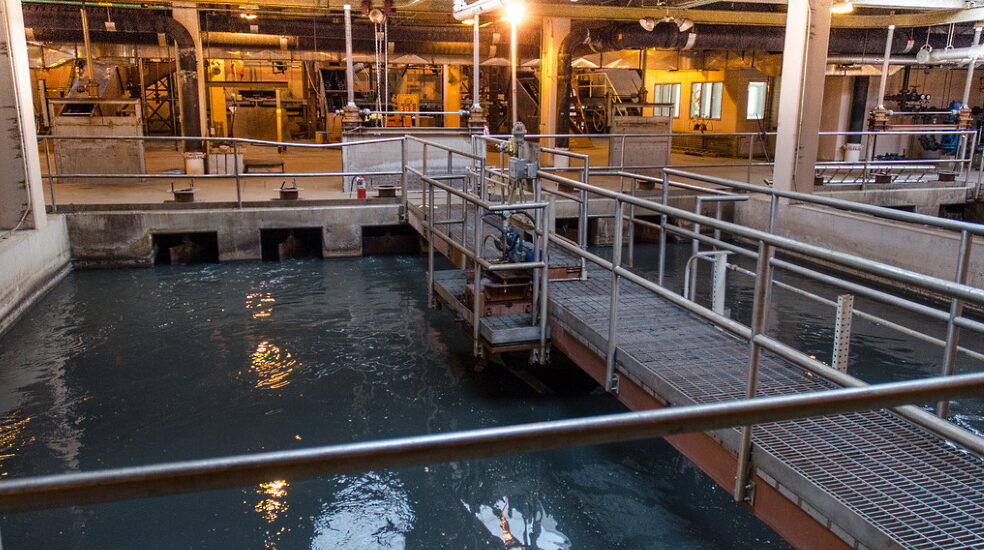
Mechanical, physicochemical, chemical, biological and other methods are used for modernization wastewater treatment plants.
One of the commonly used purification methods is multi-stage filtration of biologically treated water.
For this, high-tech filters of various types are used, including drum mesh filters.
To achieve a higher degree of wastewater treatment and removal of fine suspended particles, dissolved inorganic substances, organic colloids and others, wastewater is often subjected to chemical coagulation, followed by sedimentation and filtration.
Ferric chloride, lime, aluminum sulfate or polyelectrolytes are mainly used as coagulants. The use of different flocculants is also recommended to achieve better chemical deposition.
When using coagulation methods for wastewater treatment, it should be borne in mind that this method increases mineralization, and the resulting sludge has a high content of aluminum and iron hydroxides and a very high humidity up to more than 98%.
The modernization of wastewater treatment plants may include the installation of highly efficient adsorption equipment.
ADSorption is considered one of the most effective methods for fine wastewater treatment in cases where a large amount of dissolved organic matter is present.
Adsorption technologies are ideal for removing stubborn organic substances that are not biodegradable, such as lignin, proteins and other substances responsible for the specific color and unpleasant odor of waste streams.
Adsorption processes are considered suitable for the recovery of valuable substances that can be used for industrial purposes.
The modernization of equipment in this direction contributes to the extraction of new products and an increase in the company’s economic performance.
Wastewater treatment plant modernization
Treated wastewater from various sources can be used for agricultural and industrial purposes, ensuring the most efficient use of water resources.
This became possible thanks to advanced technologies and equipment used today in the framework of the Modernization of wastewater treatment plants.
According to the World Bank, access to clean water remains one of the greatest challenges for humankind.
Arid regions of the world such as Southern Europe, the Middle East and Africa will need innovative solutions for the treatment of domestic and industrial wastewater in the coming decades to meet growing needs.
Many countries have already suffered from the misuse of groundwater, desertification and the intrusion of seawater into aquifers.
Using modern water treatment technologies to irrigate fields and improve agricultural efficiency will be critical to the development of these countries.
GATE LINK CAPITAL LP together with international partners, offers financing, development and implementation of innovative technologies in the field of water treatment and desalination, as well as contributes to improving the efficiency of wastewater treatment plants and ensuring the safety of consumers around the world.
We offer the following technical solutions:
• Modernization of equipment for mechanical filtration.
• Installation of innovative systems for biological wastewater treatment.
• Installation of reverse osmosis equipment for water desalination.
• Improving energy efficiency and introducing cogeneration technologies.
• Installation of fiberglass pipes for wastewater treatment plants.
• Modernization of equipment for water ozonization and disinfection.
• Automation of water treatment facilities.
• Installation of HVAC systems, etc.
Our company is ready to offer a full range of services related to the reconstruction or Modernization of wastewater treatment plants, including project financing, financial modeling, engineering design, equipment production and installation, trial operation and training of the customer’s personnel.
Contact GATE LINK CAPITAL LP representatives to find out more.
Improving the energy efficiency of wastewater treatment
Urbanization and population growth require quality wastewater treatment services.
The expected higher concentration of pollutants in wastewater determines the need for the construction of more advanced facilities using modern water treatment technologies or modernization of wastewater treatment plants using new energy-intensive equipment.
This will inevitably lead to an increase in the energy consumption of wastewater treatment plants if sufficient efforts are not made to optimize the energy efficiency of the equipment.
The results of a number of European studies show that the most important energy consumer at WWTP is the activated sludge aeration equipment. It accounts for 40-80% of electricity consumed in wastewater treatment plants. Sludge conditioning and dewatering also requires a lot of energy.
Equipment for primary wastewater treatment consumes significantly less energy compared to installations for fine treatment.
This is largely determined by the type and amount of pollutants removed, as well as the required water quality set by the regulators.
Improving the energy efficiency of wastewater treatment plants requires an understanding of the load structure and tariffs. The effluent entering the facility can be stored for a certain period, and the water treatment can be postponed to that part of the day when electricity prices are low.
Before starting the modernization of wastewater treatment plants in order to increase the energy efficiency of the equipment, it is important to analyze the baseline level and structure of energy consumption.
The energy audit will show which processes require energy and in what quantities.
The next step is to implement active and passive energy efficiency measures. Passive measures are defined as easy-to-implement actions, while active measures require significant changes to existing equipment and processes, including expensive automation and optimization.
The last step is energy reporting and monitoring, through which the wastewater treatment plant operator can set targets for future energy efficiency measures and identify key performance indicators for the implemented measures.
Domestic wastewater is mostly contaminated with organic and nutrient substances (nitrogen and phosphorus), while industrial wastewater can contain a wide range of pollutants, requiring a customized approach to equipment engineering and energy efficiency management.
Other measures for the modernization of wastewater treatment plants
The most suitable areas for energy management in wastewater treatment are the aeration and pumping stages.
This includes aeration of water for biological treatment and aerobic decomposition, as well as pumping of activated sludge.
WWTP modernization measures provide significant energy savings at pumping stations for inlet and outlet wastewater streams.
As with drinking water treatment plants, the use of highly efficient motors or frequency drives is a common measure for improving energy efficiency.
Dissolved oxygen control and management is the key to energy efficiency.
Due to oversized equipment, inefficient processes or lack of control, the amount of air supplied to the aeration pools may be greater than is necessary to properly mix the streams and maintain biological activity. In addition to excessive energy consumption, over-aerated wastewater leads to sludge problems due to entrainment of solids in the stream.
The transition from coarse bubble aeration of water to the use of modern equipment with fine bubbles can reduce energy costs in this process by at least 25%. Controlling the aeration system requires the installation of properly sized dissolved oxygen sensors and blowers at an appropriate distance from each other.
Choosing the right type of pump and blower is also extremely important for improving the energy efficiency of the entire process. A common approach is to place a large number of diffusers at the inlet to aeration basins where the organic load is highest. Thus, aeration satisfies the demand for dissolved oxygen to a greater extent, providing more air at the beginning of the process and less at the end, where the ratio of nutrients to microorganisms is relatively low.
Another energy saving option is the use of intermittent aeration, including reducing equipment runtime or power reduction.
This method requires temporarily stopping air supply to a specific aeration zone or cycling air from one zone to another.
The cycle time can be automatically controlled based on the dissolved oxygen concentration.
The amount of oxygen required to maintain biological processes in aeration basins should correspond to the concentrations of organic matter and ammonia in wastewater entering the wastewater treatment plant. For example, at municipal WWTP, oxygen demand decreases at night and reaches its peak in the morning and evening.
In addition to changing oxygen demand, the efficiency of oxygen transfer in a pool depends on changes in air and water temperature, concentration of solids and surfactants, etc. Therefore, automated control of the level of dissolved oxygen can lead to significant energy savings in wastewater treatment.
When planning for the modernization of wastewater treatment plants, so-called leveling pools can be used in order to reduce energy costs.
These pools make it possible to postpone the actual water treatment process for periods of time with low energy consumption.
Another good opportunity for energy management in wastewater treatment plants is the process of removing particulate matter from wastewater. The use of equipment that more efficiently dewaters the sludge significantly reduces the overall cost of wastewater treatment.
Systems for using sludge as fuel for cogeneration have long been developed in European countries, providing additional savings during peak periods.
The methane from the anaerobic digestion of sludge can be used for cogeneration or heating to save energy in wastewater treatment plants. At obsolete WWTPs, gas flaring leads to the loss of valuable methane, which can be used to generate electricity.
The implementation of innovative measures to improve the energy efficiency of wastewater treatment plants requires detailed technical expertise.
If you are planning a modernization of wastewater treatment plants or expansion of the facility, please contact us for advice.
Modern principles and technologies of wastewater treatment
Wastewater treatment at WWTP usually includes mechanical and biological stages.
The aim of mechanical treatment is to remove large impurities from the water. It is claimed that at this stage up to 70-80% of the total amount of insoluble substances is separated.
Organic pollutant levels are also reduced by about 40-50%.
The next step is chemical and / or biological wastewater treatment. Often, after biological treatment, additional measures are provided before water is discharged into natural reservoirs. This is due to increased environmental requirements to protect water bodies and ensure the reuse of water for agricultural or industrial purposes.
In most cases, biologically treated wastewater still contains biodegradable organic matter.
Among these substances are mineral oils, pesticides and others.
One of the most important technical problems is the high content of nitrogen and phosphorus, which can lead to a decrease in dissolved oxygen in natural water bodies and their secondary pollution.
Usually, up to 40% of nitrogen and phosphorus in water is removed using standard wastewater treatment technologies, but this figure varies.
Basic wastewater treatment methods:
This occurs with the assistance of specific nitrifying microorganisms and requires the construction of special bio-pools and other equipment.
For nitrification and denitrification processes, various technological schemes are used, such as preliminary denitrification, simultaneous denitrification, denitrification stage with methanol, combined denitrification, and so on. For the simultaneous removal of nitrogen and phosphorus from wastewater, bioreactors with suspended biomass and attached biomass can be used.
Domestic wastewater usually contains significant amounts of phosphorus, most often in the form of orthophosphates, polyphosphates and phosphorus-containing organic compounds. During wastewater treatment, phosphorus compounds are constantly transformed.
Usually polyphosphates and organic phosphates are converted to orthophosphates, and some inorganic phosphates are used in metabolic microbiological processes.
At the outlet of the wastewater treatment plant, 80-90% of the contained phosphorus will be in the form of orthophosphates.
Chemical coagulation equipment can be used to remove them.
Biological methods can be used to remove phosphorus from water. The activated sludge, passing through many alternating anaerobic and aerobic phases, releases dissolved phosphates under anaerobic conditions. Traditionally, the main advantages of biological phosphorus removal methods are low cost and high efficiency.
Biological lakes are considered suitable for the removal of some contaminants.
This requires the construction of huge artificial structures, inside of which ideal conditions for natural biological processes are created.
If you are interested in the implementation of innovative biological wastewater treatment methods, our engineers are ready to develop for you a customized WWTP modernization project. Contact our consultants to find out more.
Removing phosphorus from wastewater: new business opportunities
Phosphorus is a key element for fertilizer production and for improving agricultural efficiency on a global scale.
At present, it is mainly produced from phosphorite, the deposits of which are concentrated in several exporting countries such as Morocco, China and the United States.
On the other hand, the irrational use of phosphorus and the leakage of phosphorus-containing fertilizers, detergents and wastewater into natural water bodies lead to eutrophication. In recent years, more and more attention has been paid to the development of technologies for removing phosphorus from waste streams and reusing its products. There are currently over 70 phosphorus recovery plants operating in Europe, North America and East Asia.
In wastewater treatment, phosphorus is usually removed by chemical or biological methods.
As a result, this element accumulates in the sludge, which undergoes anaerobic decomposition, dehydration and incineration.
Thus, phosphorus can be recovered from effluents removed during dewatering, as well as from treated sludge or ash.
Equipment for the removal of phosphorus from the liquid phase ensures the extraction of up to 50-70% of the element, after which the remaining amount of phosphorus is removed with the sludge. Usually in this phase about 20-40% of phosphorus is extracted.
The resulting product is struvite (magnesium ammonium phosphate) or calcium phosphate. The advantage of the approach is that it can be easily integrated into existing wastewater treatment plants. Thus, the modernization of wastewater treatment plants for phosphorus recovery opens up new economic opportunities.
Since up to 95% of the phosphorus entering the wastewater treatment plant is deposited in the sludge, the potential for its recovery from the sludge is the highest.
The interest in modernizing equipment in this area is growing all over the world.
The sludge from wastewater treatment plants is also used directly as fertilizer, but this is associated with environmental risks due to the high content of heavy metals, pathogenic microorganisms and organic pollutants. Therefore, technologies for extracting phosphorus from sludge must cope with these pollutants. The most common method is crystallization, a chemical technology using a strong base or acid.
When recovering phosphorus from sludge ash in wastewater treatment plants, it is important to incinerate the ash separately from other waste. Co-combustion significantly reduces the concentration of phosphorus in the residual ash and increases the concentration of pollutants.
During incineration, the volume of sludge is significantly reduced, while organic pollutants and pathogens are completely removed.
The advantages of this technology include a small ash volume.
Product quality is highly dependent on the disposal processes used. If chemical removal of phosphorus is used, high levels of aluminum and iron can adversely affect product quality and future use.
Thermochemical methods are used to reduce the content of heavy metals and increase the bioavailability of phosphorus in the ash formed during the combustion of sludge at the WWTP.
Most processes for the recovery of phosphorus from wastewater involve the release of calcium phosphate or struvite by precipitation / crystallization. Calcium phosphate, or hydroxyapatite, is a product whose properties are comparable to those of phosphorite. For this reason, it should be borne in mind that the kinetics of precipitation of calcium sulfate plays a more important role than factors related to thermodynamic equilibrium.
Spontaneous precipitation from solution is usually not observed at all, unless very strong supersaturation occurs.
However, separation of calcium phosphate can be achieved by adding crystalline particles such as sand and calcium silicate hydrate, which initiate the precipitation / crystallization process.
Nanotechnology for the modernization of wastewater treatment plants
In many developed countries, natural water bodies are highly polluted as a result of human activities, which poses a serious risk to public health.
Contaminated water purification involves the process of removing, reducing the concentration or neutralizing pollutants that threaten humans or the safety of ecosystems.
Modernization of wastewater treatment plants using nanotechnology is one of the areas in which we have been able to concentrate significant investments in recent years.
Different wastewater treatment methods in this area are used for different types of pollutants, and there is no one size fits all solution. Given the complex chemistry of polluted waters, it is usually necessary to use a combination of technologies to reduce the concentration of harmful agents to acceptable levels.
Old WWTPs, which rely on traditional mechanical installations (sand traps, coarse membrane filters), do not provide an adequate level of wastewater treatment in today’s environmental realities.
Nanotechnology provides a much more efficient solution for quickly, efficiently and economically removing toxic contaminants from water. Among the innovations in this area are nanomaterials with improved selectivity for the removal of heavy metals and other industrial pollutants.
The use of nanotechnology provides many benefits, including higher reactivity, larger coverage area and active binding of contaminants).
A wide range of nanofilters and innovative materials are used today at all stages of ground, surface, industrial or drinking water purification, each of which performs specific functions.
Among the nanomaterials and nanoparticles used in wastewater treatment, we can name zeolites, carbon nanotubes, self-forming monolayers on mesoporous supports (SAMMS), biopolymers, monoenzyme nanoparticles, zero-valent nanoparticles, bimetallic nanoparticles and much more.
Thanks to close cooperation with leading scientific institutions in Spain and other European countries, we can offer unique technical solutions for your business, ensuring the achievement of a high degree of wastewater treatment with minimal investment.
Contact GATE LINK CAPITAL LP
consultants to find out more.
GATE LINK CAPITAL LP can help you upgrade your wastewater treatment plant and create the optimal strategic equipment maintenance plan based on your specific business needs and financial resources.
Wastewater treatment plant modernization: our services
Every day, WWTP operators face new challenges, including stricter environmental legislation, rising energy costs and the emergence of new pollutants.
All of this increases operating costs and requires more efficient business solutions.
GATE LINK CAPITAL LP partners with reputable scientific institutions, international associations, equipment manufacturers and financial institutions to provide each client with the optimal solution.
Our company, together with our high-net-worth angel investors from all over the world, participated in the implementation of investment projects in many countries, proving the advantages of an innovative and comprehensive approach.
GATE LINK CAPITAL LP
E-MAIL: credit@gatelinkcapitallp.com
Website: https://gatelinkcapital.com/