
Cement plant construction, modernization and expansion: loans and financing
- March 24, 2026
- Posted by: Gatelink Capital
- Categories: Energy consumption in cement production, GATE LINK CAPITAL LP offers a full range of financial and engineering, Modernization and expansion of cement plants, Production waste Raw materials and coal thermal energy, Sources of emissions from cement production
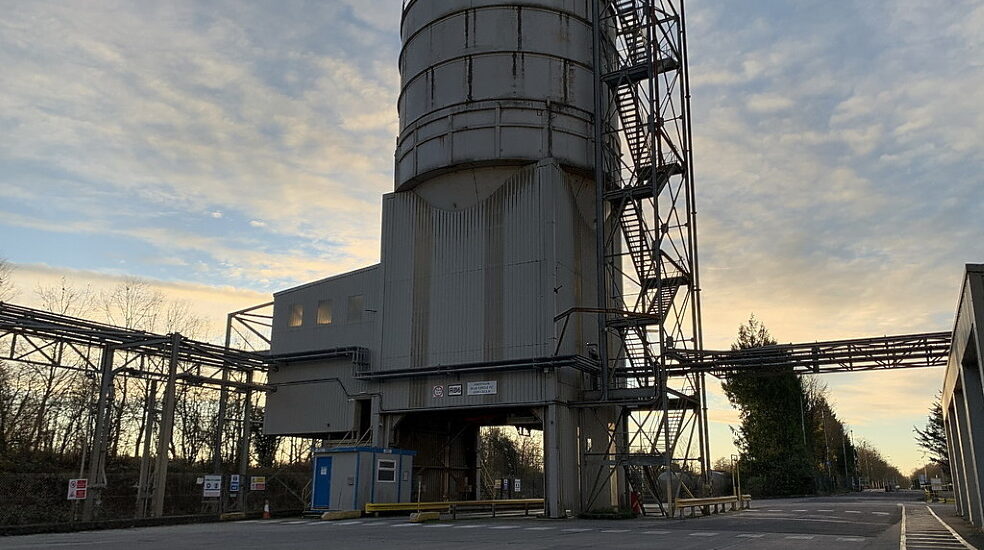
GATE LINK CAPITAL LP offers a full range of financial and engineering solutions for the modernization and expansion of cement plants around the world.
The technological progress of recent years has opened up great opportunities for improving the energy efficiency and environmental performance of the cement industry.
We and our partners implement successful projects in Europe, North Africa, South America and the Middle East, contributing to the achievement of business goals.
One of the challenges for the cement industry in developing countries is the wet manufacturing process.
Outdated technologies consume a huge amount of energy, which negatively affects the competitiveness of products.
In addition to switching to a dry process in cement production, our engineering company implements other projects leading to increase the efficiency of existing cement plants.
This includes the Modernization and expansion of cement plants kilns, the introduction of vertical cement mills, as well as the design and installation of renewable energy equipment.
The increase in production and efficiency is reflected in the achievement of the impressive financial results that our customers demonstrate shortly after modernization.
Improving the energy efficiency of cement production
The cement industry has a very high energy consumption, which depends on the process and equipment used. The main types of energy for cement production are heat and electricity.
In the context of rising prices for natural resources, the energy efficiency of cement plants, both in terms of heat and electricity consumption, has remained one of the top priorities for many decades.
Engineers offer engineering services in the field of optimizing cement production and increasing its energy efficiency. We carry out a comprehensive modernization and expansion of cement plants anywhere in the world.
Designing new clinker production lines, minimizing losses of electric and thermal energy at all stages of the technological process, using renewable energy sources and much more. We will develop an individual solution for your business.
Energy consumption in cement production:
The theoretical amount of thermal energy for the production of cement clinker is determined by the energy necessary for burning clinker (about 1700-1800 MJ / t) and the heat necessary for drying and preheating of raw materials.
Consumption mainly depends on its initial moisture content.
Practice shows that the energy consumption of dry process cement plants with multi-stage cyclone preheaters and furnaces varies widely. These differences are due to shutdowns and even restarts of equipment, as well as to significant differences in the quality of raw materials.
The main consumers of electrical energy are cement mills, as well as exhaust fans. This equipment accounts for more than 80% of total energy consumption. On average, energy costs (including fuel and electricity) account for approximately 40% of total cement production costs.
Electrical energy accounts for up to 20% of the energy consumption of a cement plant. Electricity consumption varies from 90 to 150 kWh / t of cement, while a wet process is much more energy intensive than a semi-wet or dry process.
Electricity consumption also depends on the nature of the product and the degree of grinding. In many cases, energy use can be minimized by replacing obsolete clinker production lines.
Production waste is often used to generate energy and reduce dependence on traditional fuels. This trend has been growing steadily over the past few decades.
Being a highly developed and established industry, the cement industry does not expect radical changes that could significantly reduce energy consumption. Over the past 25 years, the efficiency of the global cement industry has improved mainly due to the dry process.
If you are thinking about financing, modernization and expansion of cement plants or new facilities, GATE LINK CAPITAL LP is ready to offer the best solutions for your business.
Preparation of raw materials and fuels:
One of the main opportunities for energy saving is the installation of highly efficient systems for transporting raw materials and fuel.
Pneumatic or mechanical conveyors are usually used for this purpose, but mechanical equipment consumes less power.
According to studies, the potential energy savings resulting from the transition to mechanical conveyor systems are about 1.8-2.0 kWh / t.
Replacing high-power bucket elevators with pneumatic conveyors for moving materials to heaters and grinding bins reduce energy consumption by 60-65%. To determine the investment costs and the payback period, our specialists need to assess the situation at a particular plant.
Production of a high-quality product and maintaining conditions will require complete homogenization of the material. The modernization of grinding equipment reduce heat consumption by 20 MJ / t, and the consumption of electric energy by 0.7 kWh / t.
Old cement plants use compressed air to mix the raw mix. Energy consumption in this case reaches 1.5 kWh / t. In modern plants, more efficient gravitational homogenizers (0.1-0.5 kWh / t) are used for this purpose.
Traditional ball mills, which are used to grind certain types of raw materials (limestone), can be replaced by roller mills. Highly efficient grinding equipment saves energy without compromising product quality.
It is believed that the installation of vertical or horizontal roller mills can lead to energy savings of up to 6-7 kWh / t. An additional advantage of this modernization is that vertical roller mills are able to combine the drying of raw materials and the grinding process.
The raw materials for the production of cement have different grindability. Harder materials require more energy to achieve the desired particle size. Different materials must be ground with appropriate equipment, focusing on energy savings.
As in previous cases, a strictly individual approach to improving the energy efficiency of cement production is required.
A relatively recent development is the use of classifiers. Highly efficient classifiers separate small particles and return large particles back to the mill.
Fuel preparation for a cement plant is most often performed at the production site. This step may include crushing, grinding and drying the coal.
The use of roller mills allows you to grind coal without preliminary crushing, as well as effectively process coal with a high moisture content. Vertical roller mills designed for grinding coal are widely used in the cement industry. Their energy consumption of is about 16-18 kW / t of coal.
Roller presses similar to those used to grind cement and raw materials are generally more efficient than conventional mills. They are used to grind both raw materials and coal, although coal grinding equipment should also have special explosion protection.
Clinker production modernization:
Heat loss by the kiln can occur if the process conditions are not appropriate or the it is not properly controlled.
Automated control systems can optimize these conditions depending on the fuel type. Automation helps to improve the quality and grindability of the product.
Clinker production modernization may include the installation of analyzers that allow operators to determine the chemical composition of raw materials, making timely changes to the process.
A homogeneous mixture ensures stable operation of the kiln, which also leads to significant fuel economy. Energy savings resulting from the installation of modern control systems can range from 3 to 10%. The payback period can reach only 3 months.
Outdated clinker burning systems have low efficiency due to problems such as poorly controlled combustion, incomplete combustion with a high formation of carbon monoxide.
Advanced systems are characterized by a more suitable flame shape, complete combustion of fuel and less use of air.
Modern flame control technologies can save up to 10% of fuel, depending on the type of cement kiln. Today, it is common practice to recycle gases from the end back to the combustion area, which improves flame stability and protects the surface from burning particles.
Installing fan control system can result in lower energy consumption and lower maintenance costs. The energy savings resulting from the implementation of this measure vary, as the configuration of the fan system can vary significantly. Practical experience shows that installing frequency controllers on fans can reduce energy consumption by 5 kWh / t.
The exhaust gases from the kiln and clinker cooler are a source of energy that can be used to dry raw materials or to generate electricity. Heat recovery can provide significant savings of up to 30%.
The approach to modernization of heating systems depends on the characteristics of raw materials and the production process. When the moisture content of the feed exceeds 8%, the heat demand is high. Under these conditions, multi-stage heating systems demonstrate the greatest efficiency.
Another measure is the installation of a precalciner and, where possible, an additional heater.
The precalcinator increases plant productivity, helping to reduce fuel consumption and nitrogen oxide emissions.
Modernization and expansion of cement plants
GATE LINK CAPITAL LP with partners offers solutions in the field of industrial automation and modernization of industrial facilities.
We offer financing, construction and modernization of existing cement plants around the world, including the construction of a dry cement production line and the introduction of innovative energy-efficient technical solutions.
Engineers strictly comply with all the standards and parameters of the project, providing comprehensive coverage of the needs of our customers. We are known for the uncompromising quality of services and the reliability of the proposed technical solutions.
Modernization and expansion of cement plants requirements:
• cement mills;
• rotary kilns for the production of cement clinker;
• clinker coolers;
• dosing equipment;
• loading systems for raw materials and finished products;
• packaging lines for finished products;
• production automation systems and much more.
A high level of professional competence contributes to the excellent results of technical and business cooperation.
Sources of emissions from cement production
The main sources of dust emissions are raw material preparation processes, including grinding and drying (mills and dryers), clinker burning (kilns and clinker coolers), fuel preparation systems and coal grinding mills.
Diffuse dust emissions can occur during storage and transportation of raw materials or solid fuels. Sources of such pollution can be open warehouses, conveyor belts and driveways.
Clinker burning is a high-temperature process leading to the formation of nitrogen oxides.
These potentially harmful substances are formed during combustion.
Sulfur dioxide emissions are dependent on the total amount of sulfur compounds used. They are mainly determined by the content of volatile sulfur in the material and fuel.
Organic impurities from natural raw materials during the clinker burning process cause significant emissions of carbon monoxide and organic carbon substances.
Emissions of polychlorinated dibenzodioxin and dibenzofuran (PCDD / F) depend on the kiln design, combustion conditions, quality of raw materials and equipment for emission control.
PCDD / Fs can also form during or after preheating if the feed contains a sufficient amount of chlorine and hydrocarbon precursors.
Emissions of hydrogen chloride and hydrogen fluoride are usually small. They are the result of certain substances entering the kiln system.
Ammonia emissions occur at the initial stages of the raw material production process, and the ammonia content in flue gases reaches 200 mg / m3. Additional emissions of unreacted ammonia are generated using certain technologies, such as selective non-catalytic reduction (SNCR).
Other organic pollutants released during cement production are chlorobenzenes and polychlorinated biphenyls. Measurement of these substances is recommended under special operating conditions.
Cement plants are major sources of carbon dioxide emissions. According to studies, the cement industry emits approximately 2.5% of global CO2 emissions from industrial and energy sources.
Carbon dioxide is released during the production of clinker. This is a by-product of calcination, which forms in the upper, colder part of the kiln.
All of the substances listed above contribute significantly to global air pollution.
We can offer the most effective and safe solutions for your business.
If you want to know more about financing for modernization and expansion of cement plants, contact GATE LINK CAPITAL LP any time.
GATE LINK CAPITAL LP
E-MAIL: credit@gatelinkcapitallp.com
Website: https://gatelinkcapital.com/