
Hotel construction project funding: general basis
- June 25, 2026
- Posted by: Gatelink Capital
- Categories: Bridge financing, Collateral or project-based, Funding of hotel investments, Hospitality industry, Hotel construction project funding: general basis, Hotel project funding , Hotel project funding: construction lending
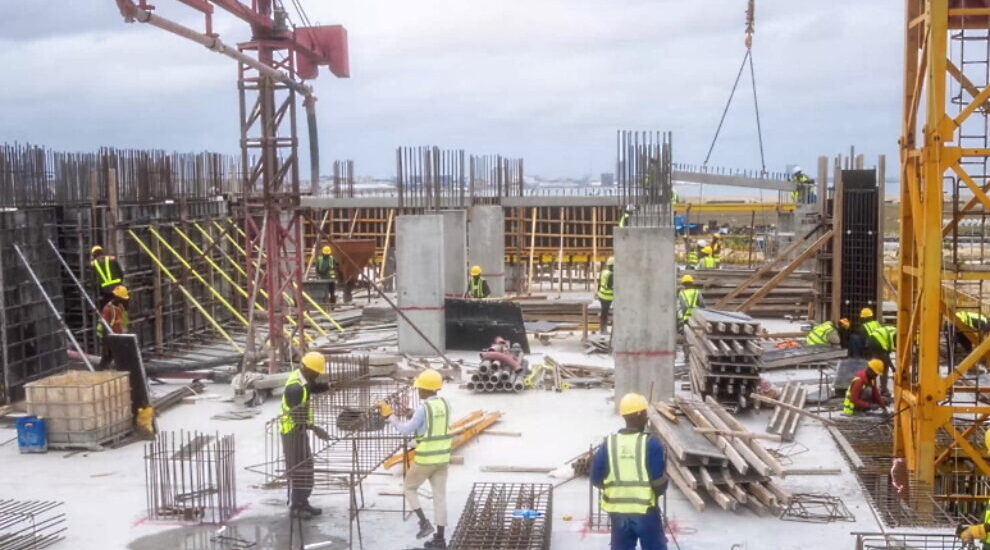
Companies taking their first steps in hotel construction project funding and hospitality business often experience difficulties in financing projects.
Sometimes they don’t have experience in the industry, they don’t have a credit history, and they don’t even have adequate collateral.
Obviously, before starting any capital-intensive project, it is critical to conduct a comprehensive study of the company and consult with the top management who plans to invest in the hotel. This work should address the possibility of obtaining funds to finance the project and analyze the most effective ways to attract them.
Financing of large projects in the hotel business can be carried out using a wide range of internal and external resources.
Equity capital can be generated as a result of current operating activities (for example, current income from other hotels, retained earnings, depreciation, sale of assets), as well as by increasing the company’s authorized capital. An increase in the authorized capital can be carried out through contributions of the owners or by attracting new partners (issue of new shares).
An important way to raise capital is the cooperation of the hotel business with venture capital funds. Venture capital funds are involved in high-risk projects with above-average potential returns. As a rule, such projects are not accepted by large banks due to an excessively high level of risk.
The most common debt securities that serve as an instrument for hotel construction project funding and hospitality facilities are bonds.
Other securities that are used relatively rarely include bills of exchange and warrants.
Bonds are securities issued in series, in which the issuer confirms the debt to the creditor and undertakes to perform a specific action in relation to him. Bonds come in different types depending on the type of issuer, maturity, face value, interest rate, additional options and ways to minimize the investment risk of a particular project.
Hotel project funding: construction lending
As the pandemic draws to a close, the hospitality industry is looking to the future.
The basis for the recovery and prosperity of this industry is funding the construction of hotels and affordable long-term loans for new facilities or the reconstruction of existing ones.
By 2020, hotel construction around the world was at a high level, requiring multi-billion dollar funding for nearly 15,000 new projects with more than 2.4 million new hotel rooms.
Today, financial institutions and other providers of capital are extremely cautious about funding new projects, which requires more comprehensive research and analysis, as well as increasing the demand for professional support and management of investment projects.
GATE LINK CAPITAL LP is ready to offer your business long-term financing for the construction and modernization of hotels in Europe, the USA, Canada, Latin America, the Middle East and South and East Asia.
We specialize in long-term loans, organization of project finance (PF) schemes, investment engineering, consulting and management of large projects.
To find out more about our services and opportunities, contact GATE LINK CAPITAL LP representative and schedule a free consultation at a convenient time.
Hotel construction project funding: lending and loans
Until recently, bank loans have been the most common external source of hotel construction project funding.
When choosing loans, experts recommend that companies carefully read the policy of a particular bank regarding commissions and additional fees charged to customers.
The offers of banks are as diverse as the terms of financing.
Since banks strive to ensure a high return on capital, the cost of a loan consists of several elements, such as a fee for processing a loan application, a commission for providing funds, interest, and more.
As part of a credit relationship, the bank provides the company with funds, and the borrower is obliged to repay them with interest due in accordance with the loan agreement. Investment loans for the construction of hotels are often provided for a period of 7-10 years or more.
Together with an investment loan, a loan for replenishment of working capital can be issued, which provides additional benefits to project participants. The procedure for applying for a loan requires submitting to the bank the results of studies related to the funding of hotel investments. These include a business plan, financial plan, estimate, project documentation and other documents.
In the hotel industry, important indicators for lenders are, among others, the RevPAR index (profitability of an available room), NOI (net operating income), LTV (loan-to-value ratio), NCF (net project cash flow) and others.
During the negotiation process, the main provisions of the future loan agreement are formulated, such as the accrual of a penalty for early repayment of the loan, the possibility of recourse and requirements for additional borrowing.
The results of the analysis of the loan application and the response of the bank will largely depend on the existing credit risks and the creditworthiness of the company. The level of risk is significantly affected by the availability of liquid collateral. Such collateral can be a land plot, as well as a financed hotel complex, movable property of the borrowing company, financial assets, etc. The collateral provided, its value and liquidity affect the final cost of borrowed funds.
To increase the chance of obtaining a loan for hotel construction project funding, experts recommend using such auxiliary tools as guarantees.
In many cases, additional mechanisms are being developed to ensure debt repayment, such as a guarantor’s application to enforce financial obligations (restrictions on the payment of dividends to shareholders, etc.).
An important point that is taken into account by banks when considering a loan application is the borrower’s financial participation in the project.
The more significant the initiator’s participation in hotel construction project funding, the higher the chance of obtaining a loan on favorable terms.
Most often, credit institutions require the financial participation of the project initiator at the level of 30-60% of the total cost of the hotel.
However, some financial mechanisms make it possible to implement a project with the participation of the initiator at the level of 10% or even lower.
In the case of granting loans to the hotel business in foreign currency, the currency and interest rate risk is additionally increased. The bank can reduce the interest rate risk by obliging the borrower to enter into an IRS (interest rate swap). This means replacing fixed interest rates with floating interest rates.
Currency risks are also minimized through hedging (futures contracts).
The IRS refers to an agreement between two counterparties to exchange a fixed interest rate for a floating interest rate. The floating interest rate is set for a partial period based on the base rate (eg EURIBOR or LIBOR). This tool serves as a hedge against adverse changes in interest rates. The agreement is concluded for a certain period of time.
The key document on which hotel business lending is based is the loan agreement. The loan agreement specifies the specific purpose of the loan, the terms of its repayment, the currency of the loan, the collateral and the repayment schedule. The preparation of this document requires a professional approach and repeated consultations between representatives of the bank, the borrower and other interested parties.
Due to the high social significance of certain investment projects, the state, as a regulator, can pursue a policy of economic stimulation of priority sectors. In particular, the government may support environmental, infrastructure, high-tech projects or projects aimed at improving the situation of certain social groups.
Private hotel projects can rarely rely on government support, but in some cases support is provided in the form of loan subsidies and guarantees. Ultimately, these solutions reduce the need for equity capital and reduce the value of the collateral provided.
Leasing as a tool for funding the purchase of hotels
Leasing or factoring can be alternative instruments for hotel construction project funding.
These instruments can be used, for example, to finance the purchase of hotels. In practice, there are two types of leasing: operating leasing and financial leasing, which have certain limitations.
Operating lease actually refers to obtaining the right to use property for periodic lease payments and without the obligation to buy the property at the end of the term of the agreement. The asset remains the property of the lessor and is recorded on the lessor’s balance sheet. The lessee’s expenses represent the cost of the monthly lease payments and part of the down payment, determined depending on the planned length of the lease period.
Financial leasing essentially means “leasing” financial resources (funds).
The lessee becomes the owner of the asset, which is recorded on his balance sheet. This fact is of great importance for calculating depreciation and tax liabilities of the company.
Attention should be paid to leaseback, when the owner of an asset sells it to a leasing company and becomes its lessee on the basis of a separate agreement. Through such a transaction, the company receives an immediate cash inflow and continues to use this asset (hotel complex).
Factoring is a type of commercial transaction in which a specialized financial institution (factor) acquires claims for payment of money that a client owes to another party as a result of its current activities.
The conclusion of a factoring agreement can significantly speed up the implementation of current investment projects and increase liquidity.
If you need professional advice on the financing of hotels and tourism projects, contact ESFC Investment Group and make an appointment at any convenient time. We will answer any of your questions and offer the best financial solutions for a specific investment project.
The role of a business plan in hotel financing: investment consulting services
Potential lenders or investors want to know more about the history of the company, its current results, owners, services, the position of the hotel in the tourism market, its development strategy and competitors.The business plan describes the history of the company and its development plan for the future.
It defines the mission and strategy of the company, its goals, resources, market, target group of customers and direct competition. Essentially, a hotel business plan is a plan of action, according to which investments will be realized and results will be achieved in the future. It should present a realistic picture of the future based on previous analyzes and studies, contracts and plans.
A detailed financial plan for a hotel project is designed to answer any questions about the expected financial results in a certain period.This plan is drawn up on the basis of reports, balance sheets, analysis of financial flows and changes in the company’s capital structure. The finance team should pay particular attention to standard project financial performance indicators, sensitivity analyses, loan maturities, schedule of financial needs, etc.
A very important element of the financial and economic plan is the operational forecast, compiled in accordance with USALI (The Uniform System of Accounts for the Lodging Industry). This generally accepted system requires taking into account hotel services, organizational structure, staff motivation, hotel occupancy levels, service profitability, fixed costs, and much more.
The success of the project will largely depend on whether your company can obtain the necessary funding on adequate terms.
In general, the more effort a team puts into a hotel’s business plan and financial planning, the more detailed, substantiated and persuasive documents a company can provide to potential investors and lenders.
A company that specializes in this type of consulting and has the knowledge, practice and ability to raise capital can help achieve this goal.
If you are interested in investment consulting and project finance services, GATE LINK CAPITAL LP is at your service at any time.
E-MAIL: Credit@gatelinkcapitallp.com
Website: https://gatelinkcapital.com/