
Thermal power plant projects: financial models
- April 26, 2026
- Posted by: Gatelink Capital
- Categories: Advantages of bank financing of thermal power plants, Financing model for a thermal power plants project, Financing models of the thermal power plant, implementation of large energy projects, Long-term bank loans for busines
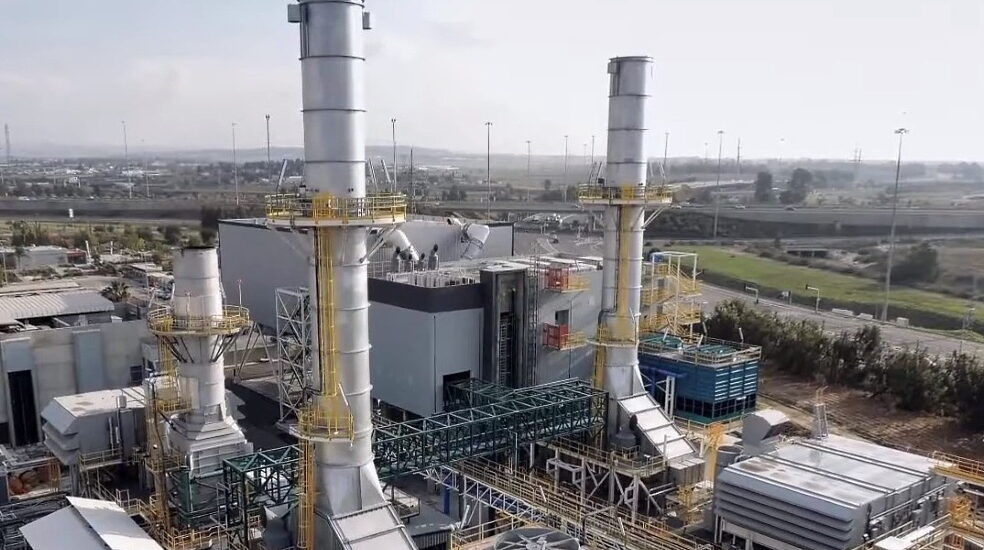
The basic structure of a thermal power plant projects financing can vary significantly depending on the model chosen.
When structuring a project finance, it is important that the lender tailors the construction contract or EPC contract accordingly.
It should be drafted in such a way that the rights that the issuing company has in relation to the said contract can be transferred or exercised in favour of the lenders.
A professional analysis of the contract as part of the structuring of a thermal power plant projects finance is crucial mainly due to the following fundamental aspects:
• The lender or investor must have access to any economic benefit that the issuing company receives from the contract. In the event of a breach of the terms, these funds can be transferred to compensate for losses in favour of the party financing the construction of the thermal power plant.
• The project proponent company has limited economic liability or financial obligations to the contractor, which are defined in such a way as to avoid “overpricing” of the project. In order to minimise risk, it is important to conclude construction contracts on a “lump sum” basis.
It is clear that the more predictable the project budget is and the more limited the possibility of increasing it during the construction phase of the facility, the lower the risk for the investor and, therefore, the greater the guarantee of return of funding.
The financing model for a thermal power plants project should be designed in such a way that the parties are maximally interested in the successful completion of this project. It is obvious that the investor strives for two things. Firstly, the financed project should be completed on time and put into operation within the planned time frame. Secondly, the investor is interested in the absence of significant cost overruns and budget exceedances during the construction phase.
If the project initiator does not guarantee that the above-mentioned points are duly provided for in the relevant construction contract, then there is a risk that potential investors will refuse to participate in the project. In the case of a bond issue, the success of their placement cannot be guaranteed in these circumstances.
For these reasons, the involvement of professional financial intermediaries is important for the proper organization of financing for the construction of a thermal power plant and ensuring acceptable conditions, whether it is a new or mature project.
Bank lending for the construction of thermal power plant projects
Successful launch and expansion of any business initiative, including the implementation of large energy projects, requires accessible sources of financial resources.
Bank loans are a very popular source of capital for the acquisition of fixed assets, financing of operating expenses, fulfillment of contractual obligations to suppliers, contractors, customers and other creditors.
Despite the wide range of available sources of financing, the issue of financial support of the project with bank capital comes to the fore.
The financial model of a thermal power plant projects based on bank lending stands out for its simplicity compared to alternative models.
Despite the rapid development of stock markets, banks and credit institutions are much more important sources of financing for the energy sector. In some regions, investment loans account for more than half of all implemented capital-intensive projects in the energy sector.
Investment loans
An investment loan is a long-term loan provided by a bank or other financial institution to finance investment expenses related to running and developing a business, including the construction of large facilities.
This loan is used to finance investment projects related to the modernization, reconstruction or expansion of the company’s fixed assets.
The funds raised are used to purchase a plot of land for construction, build new power units or expand existing facilities, purchase generators, boilers, turbines, conveyors and other equipment.
The loan amount is allocated to the borrowing company in accordance with the individual needs of the project. The loan can be received once or, for example, in parts adapted to the implementation schedule of the investment project.
With the cost of building thermal power plants from $600 to $1,000 per megawatt, the total cost of the project can reach several hundred million dollars.
This makes the development of a financial model critically important for the success of the entire project.
The condition for obtaining an investment loan for the construction of a thermal power plant is documentary evidence of the economic efficiency of the project, projected profit, as well as the availability of material security or other reliable guarantees, well-prepared estimates and financial plans.
To reduce credit risk, banks often require the borrower to contribute to the planned investment project.
Depending on the type of project, the contribution ranges from 10% to 20% of the net investment value. The application of this solution is based on the assumption that a borrower who risks his own capital will be more interested in the success of his investment.
Advantages of bank financing of thermal power plant projects
Project financing and bank loans are the most common methods of raising funds for the construction of a thermal power plants .
Each of these strategies has its advantages. The right choice will depend on the short-term and long-term financial goals of the company and the specifics of the specific project.
In general, the bank loan-based thermal power plants project financial model is the best option for companies that prefer to retain control over the project.
However, companies that prefer to share the risk, minimize the cost of the investment project and involve industry experts may choose project financing instruments or securities issuance.
Bank financing or bond issuance?
The choice of financing model for any capital-intensive project often presents a dilemma: to do it through the banking market or to opt for the local or international stock market?
In thermal power engineering, there are many financial and legal reasons that should be assessed in each case.
If the analysis of the financial and economic model of the project has shown that a long-term loan is required (say, 15 or 20 years), the financial advisor may suggest that the client turn to the international capital market instead of applying for a syndicated bank loan.
With rare exceptions ( e.g. long-term loans of the International Finance Corporation ), the syndicated loan market offers a shorter repayment period than may be required to finance a thermal power plant project.
On the other hand, financing through the issue of bonds usually involves quite long repayment periods with the possibility of restructuring.
For this reason, financing a thermal power plant project can be carried out through the issue of bonds. Given the complex nature of the issue, companies need the appropriate know-how and professional support to successfully place bonds, especially with international investors.
Bank loans are in many cases simpler and more accessible than accessing the stock markets and arranging project finance.
However, there are several compelling reasons for financing a thermal power plant projects through international stock markets:
• The company requires large amounts of investment, but banks and the local stock market do not have sufficient appetite to finance the project.
• The company is not satisfied with the financing terms offered by local banks, funds or private investors for certain reasons.
• The project initiator company seeks to diversify its risk by gaining access to international institutional investors from other parts of the world.
• Listing bonds on an international stock market makes the project more competitive given the high rates of bank loans or the complexity of arranging project finance.
The choice largely depends on the scale of the project, the fuel supply ( natural gas, coal, fuel oil or possibly biomass ), the guaranteed demand for electricity, and the availability of strong sponsors and their experience in the sector.
It is important to understand that companies from developing countries will find it difficult to use some financial instruments such as listing bonds on the international market.
The flexibility of debt financing instruments is considered an advantage over financial models based on bond issuance due to changes in debt repayment schedules and the possibility of loan refinancing.
On the one hand, serious energy projects are carefully planned and studied, including risk assessment.
On the other hand, the construction of thermal power plants in developing countries carries serious risks that may require a revision of the financing terms at any time. This is not easy to do in the case of issuing project bonds.
The project initiator company must also foresee future legislative changes, which today in many countries are rapidly moving towards “green energy”. Obtaining government guarantees can become a guarantee of the project’s security and will contribute to its investment attractiveness.
Project financing (PF) of thermal power plants
The term ” project financing ” means financing the construction of a thermal power plants using internal financial resources and/or borrowed funds provided against future cash flows, but not against the assets of the project initiator company.
Thus, the potential return on investment and risks depend solely on the investor’s accurate and reasonable assessment of a specific project.
Project financing (PF) is widely used in the energy sector due to the attraction of large investments on an off-balance sheet basis. Due to the competent implementation of this financial model of a thermal power plants project, companies can simultaneously implement several projects without burdening their reporting with a huge debt.
In most cases, partners create a special project company whose assets serve as material collateral for the loan, and its future cash flows are used to service the debt.
In this case, banks usually provide about 70% of the project cost, but some financial institutions offer to finance 90% and even the full cost of implementation.
The ramified structure of contractual relations within the framework of project financing contributes to the optimal distribution of project risks between the parties that can best cope with these risks. Therefore, the organization of the PF, along with a detailed analysis of the project, requires labor-intensive legal work.
Regardless of the type of project and the financing method, the partners will decide for or against the project only on the basis of the risks of implementation and the expected income.
The financing structure, security and other aspects depend on the specific project.
The cost of organizing project financing (fixed costs) is considered higher compared to traditional debt financing models of the thermal power plant project. In this regard, the PF can only be used for the implementation of large investment projects estimated at tens of millions of euros.
Most often, project financing is used for the construction of large-scale facilities that require expensive R&D, engineering work, calculations, as well as long-term construction and purchase of complex equipment.
Until recently, project financing was considered quite risky, but in the 2000s, a number of economic studies appeared that confirm the significant advantages of the PF over traditional corporate lending in a number of investment projects, subject to compliance with the standards.
This financing method has been used to build thermal power plants, substations and transmission lines in the United States, Latin America, Africa, Europe, as well as in East Asia, the Middle East and other regions of the world.
GATE LINK CAPITAL LP is ready to offer long-term bank loans for business on attractive terms.
We also provide project financing for the construction of thermal power plants around the world, providing a full range of financial, legal and engineering services for energy companies.
Benefits of Project Financing
Project finance instruments are chosen by energy companies due to several key advantages listed below:
• No or partial recourse to the borrower.
• Off-balance sheet nature of project financing.
• Maximum share of borrowed funds in the project.
• No strict restrictions in the contract.
• Isolated project financing.
• Potential tax advantages.
• SPV (SPE) acts as a borrower.
• Minimization of political risks.
To better understand the advantages of project financing for the construction of thermal power plants, we will discuss each of the listed aspects in more detail.
Any combination of the above aspects is enough for sponsors to consider the project finance method as optimal for project implementation.
But the most important advantages of PF for the project initiator include limited recourse and the off-balance sheet nature of financing due to the creation of an independent project company.
If you are interested in project financing of thermal power plants, contact the financial team of GATE LINK CAPITAL LP. Together with our European partners, we have implemented numerous energy projects in more than 30 countries around the world, so we are ready to use our experience and business contacts to promote your business.
Our services for financing the construction of thermal power plants
GATE LINK CAPITAL LP has been serving private companies and government customers for over a quarter of a century.
We provide loans, project financing in the energy sector, provide credit guarantees, and also offer investment engineering services, financial model development and consulting.
The geography of GATE LINK CAPITAL LP covers almost the entire world – the USA, China, Mexico, France, the UAE, Germany, Spain, Argentina, Brazil, Venezuela, South Africa and a number of other countries.
Extensive international experience and deep understanding of the energy sector guarantee the high efficiency of our solutions.
Together with our partners, we carry out engineering design, construction and modernization of thermal power plants on coal and gas of various types. GATE LINK CAPITAL LP also offers advanced integrated solutions for industrial customers.
If you are looking for a reliable financial partner or general contractor, contact us.
GATE LINK CAPITAL LP
E-MAIL: Credit@gatelinkcapitallp.com
Website: https://gatelinkcapital.com/