
Lending and loans for refineries
- March 4, 2026
- Posted by: Gatelink Capital
- Categories: Corporate finance for oil and gas companies, Lending and loans for refineries, Lending and loans for refineries and gas industry, Loans for the modernization of refineries, Project finance (PF) for the construction of oil refineries
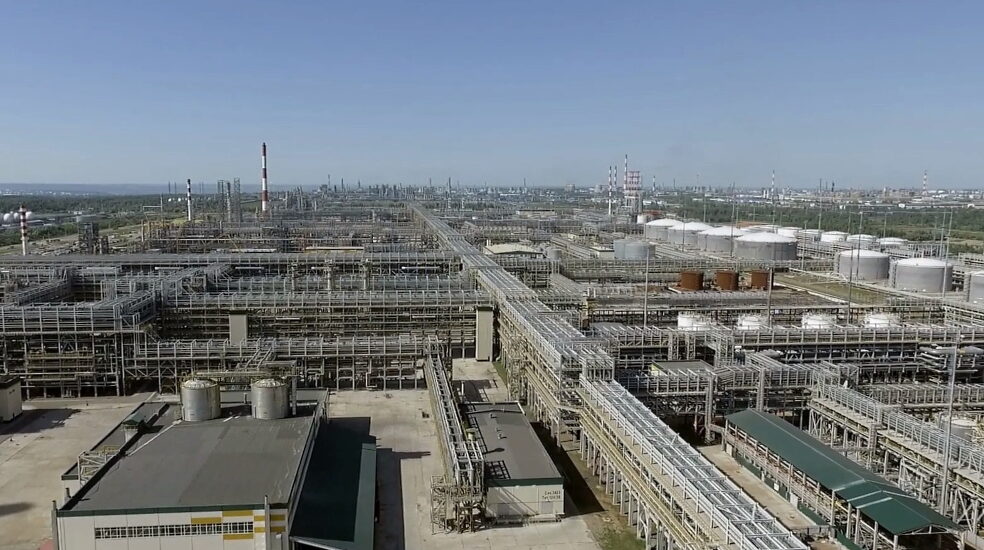
In order to obtain lending and loans for refineries development of oil production, transportation and refining, it is extremely important for management to understand the principles of the capital market, financial mechanisms and available options applicable to the hydrocarbon industry.
Lending and loans for refineries and long-term for equipment modernization plays an important role in the development of the industry around the world.
The economic recovery after the crisis requires significant supplies from the oil and gas industry.
This provides a powerful impetus for financing the construction and expansion of oil refineries (downstream), as well as for investing additional capital in the exploration and operation of oil fields (upstream) to ensure stable growth.
These are capital-intensive projects that start with the development of oil fields and end with high-tech oil refining and large-scale logistics projects.
The time interval between the initial investment in the oil and gas industry and the achievement of stable cash flows in some cases takes up to 10 years. Tightening environmental standards complicate the development of the industry, requiring companies to make new costly solutions to minimize harmful emissions. All of the above indicates that choosing the right sources for long-term project financing is critical to success.
Money is a valuable resource in times of high liquidity when interest rates are low.
Exporters of oil and petroleum products are in dire need of investment to maintain high productivity in the sector, provide national economies with fuel and prevent imports of petroleum products.
The lack of available funding sources in this situation can adversely affect the results of not only individual companies, but also entire sectors.
GATE LINK CAPITAL LP is ready to provide lending and loans for refineries including funds for the construction and modernization of oil refineries anywhere in the world.
Over the years, our company has supported financing large investment projects in Spain, Germany, France, Saudi Arabia, China, Mexico, Brazil, Argentina, South Africa and other countries.
We are always open to cooperation with large companies wo are in need of lending and loans for refineries offering promising investment projects.
It is important for decision-makers to clearly understand the reasons that make it difficult to attract financial resources for the development of the oil and gas sector and use them effectively. These reasons are directly related to the internal mechanisms of corporate finance and capital markets. Our financial team will provide professional support and advice to customers at any stage of an investment project.
Principles and constraints of lending and loans for refineries and gas industry
Oil and gas activities generally fall into two broad categories:
• Upstream: covers any activity of oil and gas companies, from exploration of hydrocarbon deposits to their production (lifting to the surface).
• Downstream: activities related to the production of hydrocarbons and their subsequent transportation through pipelines, processing and sale.
An economic analysis of the activities of a particular oil and gas company (investment project) should take into account production and processing in general. Industry-wide, upstream activities cannot be adequately assessed without analyzing downstream activities.
Investment activity factors:
The final price for hydrocarbons represents the intersection of supply and demand.
However, in the short term, certain geopolitical processes (for example, military conflicts in oil-producing regions of the world) or large-scale financial changes can affect prices more than economic considerations.
The rumor of an imminent armed conflict in the Middle East immediately raises oil prices due to consumer concerns, even if the oil companies have not yet cut production. On the other hand, low interest rates are driving up the price of oil in the hope that the global economy will accelerate and spur demand.
It is important to bear in mind that not all hydrocarbon reserves are available for immediate production. For example, probable reserves account for a significant portion of the reports, so it is more correct to view actual production as a proposal.
The price of oil and oil products will ultimately be among the deciding factors (along with the potential of oil fields) when investing in oil exploration, production and refining.
The regulatory framework is also vital due to the long payback period for this type of project. This cycle can span up to 5 years for the construction of a refinery, or up to 10 years from the date of exploration to the sale of oil or gas to the market.
The hydrocarbon production and processing industry is a striking example of the economy of scarce non-renewable resources. The more oil and gas produced, the less hydrocarbons remain underground and the more difficult it becomes to extract them.
On the one hand, this makes oil and gas companies look for hydrocarbons in remote, hard-to-reach areas. On the other hand, refineries are increasing the efficiency of crude oil refining and require periodic expensive modernizations, which further increases costs.
This is a distinctive feature of the oil and gas industry, which adjusts prices based on demand (as in most sectors), as well as on the basis of natural resource decline.
Obviously, maintaining a growing or at least constant supply requires huge capital investments over many years. In this context, the correct choice of sources and instruments for financing large investment projects becomes fundamental for the economic viability of each company.
When constructing a refinery, it is vital to design the process line in such a way as to maximize the use of raw materials and reduce the amount of waste. However, the most profitable products of crude oil refining today are high-octane gasolines, diesel and, to a lesser extent, fuel oil.
Undoubtedly, the financial performance of an oil refinery is strongly influenced by the structure and characteristics of light oil products such as gasoline and diesel.
Naphtha and diesel are mainly used in land transport and clearly dominate this market with limited competition as ethanol and alternative biofuels still have a small market share.
Jet fuel used in aviation is also a profitable product. Fuel oil is widely used in maritime transport or as a fuel for power generation. Previously, this fuel often competed with coal, but after developed countries refused to use this fuel, the situation in this market changed. However, heavy fuel oil still competes with natural gas, hydropower and nuclear power.
Historically, refining has been one of the most volatile in the hydrocarbon sector.
Refineries are absorbing the gap between upstream and downstream activities and also responding to demand at the end of the supply chain.
In addition, the industry has to constantly adapt to legal requirements that are rapidly changing against the backdrop of the global energy transition.
Refinery can experience significant pressure on profitability during periods of high oil prices, as companies find it difficult to pass on cost increases to the buyer. The low profitability of refineries in the past decade has led to a situation where funding for the construction of new facilities has practically stopped. In many countries, refineries operate at minimum capacity. On the other hand, funding for the modernization of production lines continues as improving efficiency and maintaining environmental standards are vital to the industry today.
Investments, lending and loans for refineries in oil and gas sector are mainly aimed at introducing technological advances, as well as overhauling existing refineries.
Very few projects are aimed at building new refineries.
The problem in this sector is more in managing working capital to finance complex day-to-day operations than in raising long-term financing, as is the case in oil exploration and production.
Corporate finance for oil and gas companies
A typical problem for any oil and gas company is to attract sufficient financial resources on acceptable terms at the right time to start and develop activities.
Solving this problem allows businesses to conquer markets, build competitive advantage and thrive in times of economic uncertainty and global transition to a green economy.
Corporate lending and loans for refineries refers to raising and managing the financial resources of the industry.
This area of finance answers three main questions that will aim to create added value for business owners and shareholders:
• What are the long term financial needs of the company / project?
• How can a company raise funds to finance the construction or modernization of a refinery?
• How much money does the company need to pay off short-term liabilities?
The above issues are within the competence of the CFO of the company and are closely related to other aspects of his professional activity.
Experts in this field help create business value with the help of experienced financial advisors and specialists from related fields, internal and external.
Our financial team helps clients choose and use bank loans, bonds, stocks and other debt financial instruments wisely, so that the planned projects generate as large a cash flow as possible. The financial statements of oil and gas companies have a number of unique items, and financial management in this area is significantly different from other companies.
Professional capital management used in day-to-day and short-term operations of an oil and gas company, along with effective investment planning, ensure long-term business success.
Long-term financing for the construction of an oil refinery
Long-term financing of large investment projects in the oil and gas industry is based on the issue of shares and long-term bank lending and loans for refineries against the future cash flows of the projects.
While the former financing instruments are more typical for private companies, the latter are widely attracting both state-owned oil refineries and private capital.
Issue of ordinary and preferred shares
Many companies use this financial instrument by issuing shares of various types to raise part of the funds for a capital-intensive investment project.
A company’s decision to go public can have serious long-term consequences for the current owners of the business. Therefore, in some cases, lending is considered a preferable, albeit expensive, instrument.
Ordinary shares have no priority for dividend payments or debt collection in the event of bankruptcy.
Shares, in fact, are parts of the capital of an oil and gas company, which are transferred to the hands of shareholders and give them certain rights.
In corporate finance practice, there are different classes of shares that differ in voting rights. Shares provide shareholders with rights that depend on the share of a particular shareholder in the company (project).
The following rights are distinguished:
• Receiving part of the company’s profits in proportion to the number of shares.
• Receipt of the corresponding part of the assets of the company after its liquidation.
• The right to vote on strategic issues such as mergers.
• Preemptive right to purchase new shares.
Dividends paid to shareholders represent returns on capital that shareholders invest in an oil and gas company.
Dividends are not considered an obligation of the company until the decision to pay them is announced by the board of directors.
In accordance with generally accepted financial practice, dividends are paid out of the company’s profits after taxes, so they are not taxed in most countries. However, after payment is made, shareholders must indicate them on their tax returns.
In turn, preferred shares have priority when distributing dividends or obtaining a share in the company’s assets in the event of bankruptcy. Shares of this type give the holder the right to receive a fixed dividend per share, which is why they are sometimes mistaken for debt securities.
Unlike bonds, this financial instrument does not oblige the company to pay off the debt on time, without regard to the financial condition of the company. If the company has not made a profit for the reporting period, the board of directors may decide not to pay dividends to shareholders (including privileged ones). Sometimes dividends on preferred shares accumulate. That is, if during one year the shareholders do not receive dividends even if there is a profit, the balance may be increased the next year.
In addition, dividends on preferred shares cannot be deducted by the company from the income tax base, as in the case of servicing loans.
Also, the holder of preferred shares cannot claim bankruptcy of the company for non-payment of dividends, unlike a traditional creditor.
Project finance (PF) for the construction of oil refineries
The concept of project finance refers to targeted financing of large refinery projects and other facilities, which is based on the ability of the project itself to generate sufficient cash flows to service debt.
This is a kind of off-balance sheet financing, when the project debt is separated from the financial statements of the originator and does not affect its creditworthiness.
In typical project finance, the collateral (security or guarantee of the lender against default by the borrower) is the project assets, but not the initiator’s assets. A distinctive feature of project finance in comparison with direct financing (traditional loan) is that in the first case, the lender provides financing to the special-purpose vehicle, but not to the originator. The SPV / SPE institution financially separates the project from its originators.
Traditional corporate finance often does not specify the purpose of the loan or other borrowed funds.
Project finance allows lenders to better manage credit risk than if they lend money directly to the company for multidirectional business activities.
Usually, financing of the construction of an oil refinery is carried out using 70-80% of borrowed funds and, accordingly, 20-30% of the internal financial resources of the project initiators. Arranging project finance requires multilateral negotiations with stakeholders and the formation of a complex contractual structure. The cash flow of a specific project is seen as a guarantee of the return of funding.
Structured finance methods are part of project finance and help banks minimize their risks through securitization.
Basically, project participants are restructuring their loans into bonds (negotiable obligations) that they offer in the capital markets, pegged to the project’s cash flows.
In the oil and gas industry, project finance has always been in great demand in the implementation of large projects. Its explosive growth began in the 1970s with the financing of oil production in the North Sea and Australia. Today, the PF gives petroleum producers access to affordable and flexible financing for large-scale refinery construction and modernization projects.
GATE LINK CAPITAL LP supports project finance for the oil and gas industry in Europe, the United States, Latin America, East Asia, the Middle East and North Africa.
Loans for the modernization of refineries
Previously, it was believed that the main task of modernizing a refinery is to upgrade certain types of equipment and improve certain processes.
Such activities, as a rule, are associated with the replacement or addition of existing equipment without changing the overall technological process.
In the modern sense, the modernization of refineries, first of all, consists in the organization of investment measures aimed at improving production through consistent constructive and organizational changes. These changes must be comprehensive to ensure that the enterprise fully complies with the organizational, technical and environmental standards of the industry.
In other words, the attention of management is shifted to the implementation of sequential investment operations aimed at the practical use of new scientific and technological knowledge in order to achieve commercial success.
In this context, the priority of refinery modernization should be focusing on the future, sustainable development through comprehensive transformations.
Such modernization should be based on the latest technologies in close relationship with the strategic goals of the company’s development, given its current state (depression, relative stability or rapid growth).
It is important to emphasize that such activities cover not only production, but also facility management.
A whole range of innovations should be directed towards the rational use of crude oil, increased use of by-products and environmentally friendly production. Modernization can also be considered as a purposeful replacement of outdated elements of production and management activities.
Thus, the current view of modernization should cover the full range of interconnected links in improving production, the management system as a whole, the state of the environment, work with personnel, and expanding the range of products.
Long-term bank lending and loans provides an oil and gas company with the following advantages:
• Long term financing.
• Possibility to revise the terms of the loan through negotiations with the bank.
• Loans on better terms when purchasing equipment from a specific supplier.
• Relatively simple and fast process of obtaining borrowed funds.
• Simple contract structure with a minimum of participants.
• Possibility of obtaining large loans within the consortium.
GATE LINK CAPITAL LP offers financing for large refinery modernization projects, including long-term loans from 10 million euros for up to 20 years.
Please contact our finance team for details.
Financing oil and gas projects on the best terms
The success of large projects in the oil and gas industry is based on the ability to generate stable cash flows over the long term.
Deciding on long-term financing for the construction or modernization of a refinery is critical to business in a highly competitive environment.
The mission of the company’s management is to make every investment decision as effective as possible and to find a way to implement an investment project that will bring the company a higher value. The subsequent operational phase of the project will require new solutions for financing working capital to ensure the operation of the refinery complex.
Traditional corporate finance can come from a variety of sources, such as equity increases, bond issues, leasing, lending, or various combinations of debt and equity financing. The finance department of the company must recommend the best alternative for the most acceptable investment solution (for example, the development of an offshore field or the construction of a refinery). Correctly selected financial models and sources determine the value of the future project.
The oil and gas industry today uses a variety of financing instruments to realize growing investment opportunities, increase profitability and reduce risks.
However, it can be challenging to obtain financing that is appropriate for a specific investment opportunity.
The presence of vast deposits and a growing market demanding more petroleum products are not the only factors for prosperity.
It is important for oil and gas companies to find a source of long-term financing with flexible terms, since the long construction time of refineries and high initial investment costs increase the risk and uncertainty for potential investors. Detailed study of all aspects of the project, professional financial modeling and negotiations with a wide range of stakeholders are important in this context.
At all stages of the project, companies need reliable financial partners and professional consultants who are ready to attract the resources on favorable terms and support the company’s efforts.
GATE LINK CAPITAL LP has been on the market for over 20 years.
We offer a wide range of services for business:
• Project finance services for the oil and gas industry.
• Advanced investment engineering, financial modeling and consulting.
• Services in the field of engineering, construction and project management.
• Loan guarantees and much more.
We support lending and loans for refineries and the financing of large projects in the field of oil production and refining, develop advanced models for our clients and offer professional services of asset managers, technical consultants and economists.
GATE LINK CAPITAL LP is supported by numerous reputable partners, including large investment funds, banks and other financial institutions, engineering companies, research institutes in Spain and other countries, as well as renowned manufacturers and suppliers of oil refining equipment.
If you are interested in lending and loans for refineries and construction of the facility or are looking for a long-term loan for the modernization of equipment, please contact us at any time.
GATE LINK CAPITAL LP
E-MAIL: credit@gatelinkcapitallp.com
Website: https://gatelinkcapital.com/